
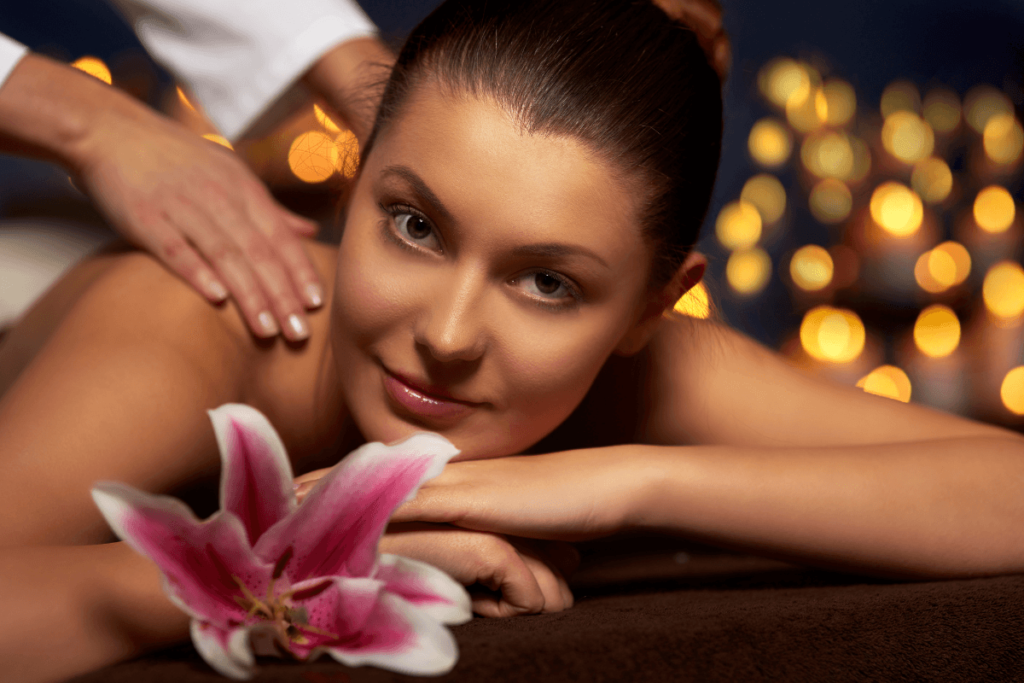
What makes Balinese massage feel so distinct isn’t one single technique – it’s the specific sequence of several traditional balinese massage techniques layered together throughout the session.
1. Long, Flowing Strokes (Effleurage)
The session typically opens with long, sweeping strokes along the length of the muscles, using warm oil. This warms up the tissue and signals to your nervous system that it’s time to relax.
2. Skin Rolling
Skin rolling involves gently lifting and rolling the skin and underlying tissue between the fingers, which helps release tension in the connective tissue (fascia) and improves circulation to the area.
3. Acupressure
Sustained pressure is applied to specific points along the body, drawing on principles similar to acupuncture but using fingers and palms instead of needles. This targets areas where tension tends to concentrate, like the shoulders and lower back.
4. Kneading (Petrissage)
Kneading movements – similar to working dough – lift and squeeze the muscle tissue, helping release deeper tension than surface strokes alone.
5. Gentle Stretching
Unlike Thai massage, which is more actively stretch-focused, Balinese massage incorporates only gentle, passive stretches woven into the flow of the massage rather than as a separate phase.
Why the Combination Matters
Each technique addresses tension differently – surface strokes calm the nervous system, skin rolling and kneading work the deeper tissue, and acupressure targets specific problem points. Together, they create the deeply relaxing, full-body reset Balinese massage is known for.
How Long Does the Full Sequence Take?
To move through all of these techniques properly without rushing, most therapists recommend at least 90 minutes – see our guide on Balinese massage duration for how to choose the right length for your session.
Frequently Asked Questions – Balinese Massage Techniques
Does Balinese massage include stretching like Thai massage?
Only gentle, passive stretches – it’s far less active than Thai massage. See our full Balinese vs Thai comparison for the difference.
Is oil used throughout the whole session?
Yes, oil is used continuously to allow the long, flowing strokes and skin rolling techniques to work smoothly.
Which technique is best for jet lag specifically?
The combination of flowing strokes and acupressure is especially effective – see our dedicated guide on Balinese massage for jet lag.
Can these techniques be adjusted for sensitive skin?
Yes – let your therapist know about any sensitivities beforehand so pressure and oil choice can be adapted.
Ready to feel the benefits?
Book a Balinese massage with a certified Elysian Salon therapist, delivered straight to your door.